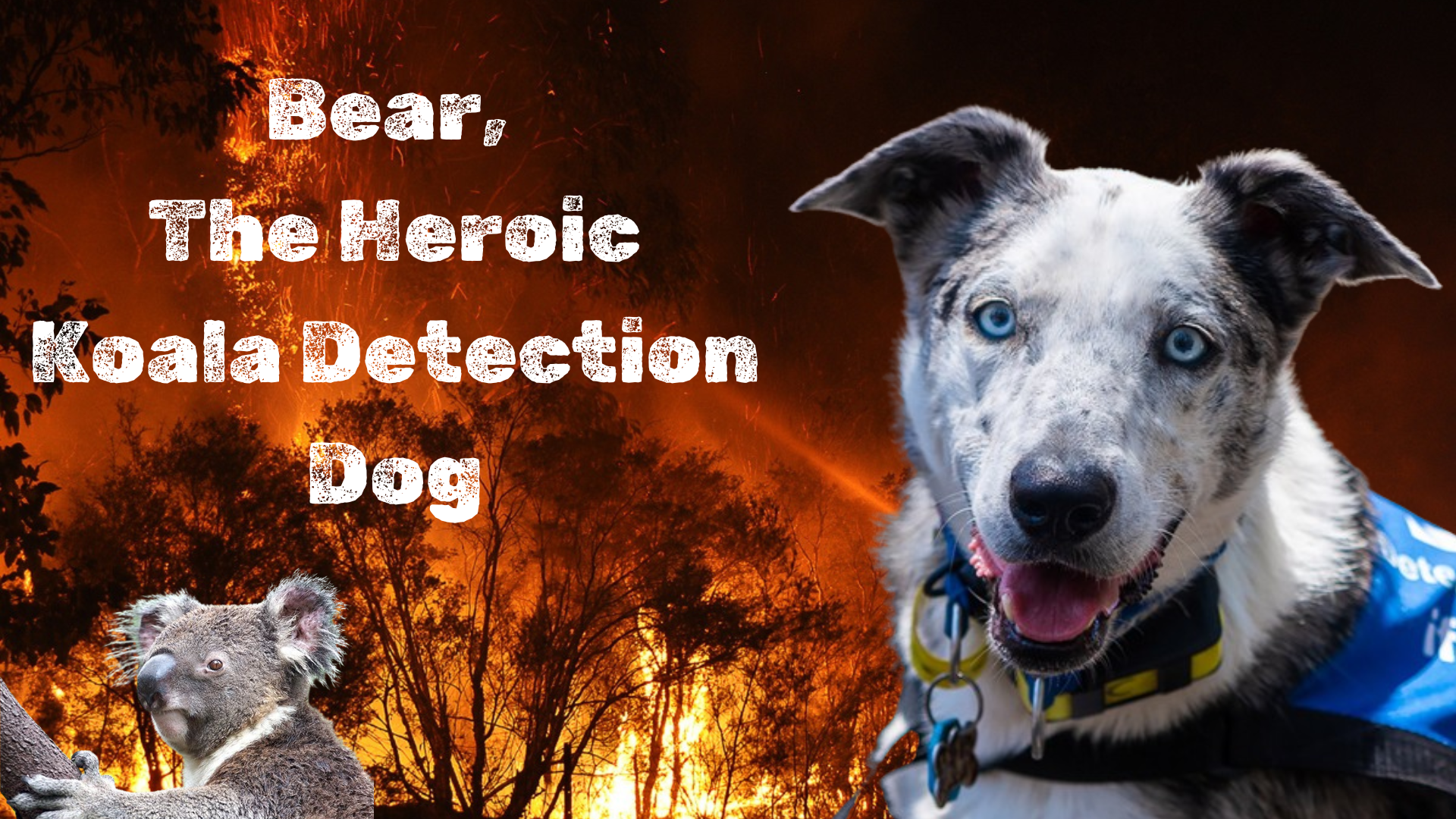

In the heart of Australia’s forests, where eucalyptus trees sway gently in the breeze and the call of native wildlife echoes, an unlikely hero has emerged—not on two legs, but four. Meet Bear, a Koala Detection Dog whose incredible work has helped rescue and protect one of Australia’s most iconic and vulnerable animals.
This heroic pup isn’t just sniffing out adventure—he’s tracking the very scent of survival. Let’s dive into Bear’s inspiring journey, the importance of his mission, and how Koala Detection Dogs are changing the game in wildlife conservation.
Who Is Bear, the Koala Detection Dog?
Bear is a rescue dog with a remarkable story. A Border Collie–Koolie mix, Bear was once a restless pup who didn’t quite fit into a traditional home setting. His boundless energy and obsessive focus, which made him difficult to adopt out, turned out to be the perfect traits for a conservation dog.
Trained by the University of the Sunshine Coast’s Detection Dogs for Conservation team, Bear became a fully certified Koala Detection Dog. His job? To sniff out koalas in the wild—especially during emergencies such as bushfires, habitat loss, and disease outbreaks.
Bear’s heightened sense of smell and relentless drive allow him to detect koalas by sniffing out their fur and scat (droppings), even when they’re high in the treetops or hidden in thick vegetation.


Why Are Koala Detection Dogs So Important?
Australia’s koala population has been declining due to habitat destruction, bushfires, disease (particularly chlamydia), and climate change. According to conservationists, tens of thousands of koalas have died in recent years, especially during the devastating 2019–2020 bushfire season.
That’s where Bear and other Koala Detection Dogs come in.
Here’s how they help:
-
Locating Injured or Displaced Koalas
After natural disasters like bushfires, dogs like Bear can search burned-out areas quickly and safely, locating surviving koalas in need of urgent veterinary care. -
Tracking Koala Populations
Conservationists rely on detection dogs to gather data about koala presence and density. This information helps protect critical habitats and influence environmental policies. -
Saving Time and Resources
Unlike human searchers, dogs can cover vast areas more efficiently and detect koalas that would otherwise go unnoticed by sight alone. -
Helping in Disease Monitoring
By detecting koala scat, dogs help researchers collect samples for testing diseases that threaten the species.
Bear’s Work in Action
Bear became internationally recognized during the 2019–2020 Australian bushfires. Wearing his signature blue booties to protect his paws from hot terrain, Bear worked alongside firefighters and rescuers to locate displaced and injured koalas in scorched areas.
Thanks to his nose and unwavering dedication, Bear helped find dozens of surviving koalas, enabling their rescue and rehabilitation. His efforts were so remarkable that in 2021, he received the International Fund for Animal Welfare’s (IFAW) Animal of the Year Award.
Bear’s work hasn’t stopped since. He continues to assist with koala conservation projects across Queensland and New South Wales, often accompanied by scientists and volunteers working tirelessly to protect the future of these beloved marsupials.
The Science Behind a Koala Detection Dog
So what exactly makes a dog like Bear so good at his job?
-
Scent Discrimination: Dogs have up to 300 million scent receptors in their noses, compared to a human’s 5 million. They can differentiate between similar odors—like koala scat and that of other animals.
-
Focus and Obedience: Detection dogs undergo intensive training to follow commands, ignore distractions, and alert handlers with precision.
-
Bond with Handlers: Dogs work closely with trained conservationists, responding to both verbal and nonverbal cues while navigating difficult terrain.
Dogs like Bear aren’t just working tools—they’re partners in conservation, forming strong emotional and working bonds with their handlers and the animals they help protect.
How You Can Help Koalas (Even Without a Dog)
While you might not have a Koala Detection Dog of your own, there are plenty of ways to support koala conservation:
-
Donate to organizations like the IFAW, WWF-Australia, or the University of the Sunshine Coast’s Detection Dogs for Conservation.
-
Plant eucalyptus trees if you live in koala habitats to support food and shelter.
-
Drive cautiously in known koala zones, especially at night.
-
Report injured koalas to local wildlife services immediately.
-
Spread awareness about the threats koalas face and the role of detection dogs like Bear.
A Furry Hero Making a Real Difference
Bear’s story is more than just a heartwarming tale—it’s a powerful example of how dogs and humans can work together to save lives, protect nature, and inspire change. As a Koala Detection Dog, Bear has become a living bridge between domesticated pets and wild animals, showing that even one dog’s nose can make a world of difference.
His legacy continues to grow with every pawstep he takes through the Australian bush, every pet and wild life he helps save, and every heart he inspires across the globe.
So next time you look at your dog and wonder what they’re capable of—remember Bear, the Koala Detection Dog, and the incredible role dogs can play in shaping a better world.