


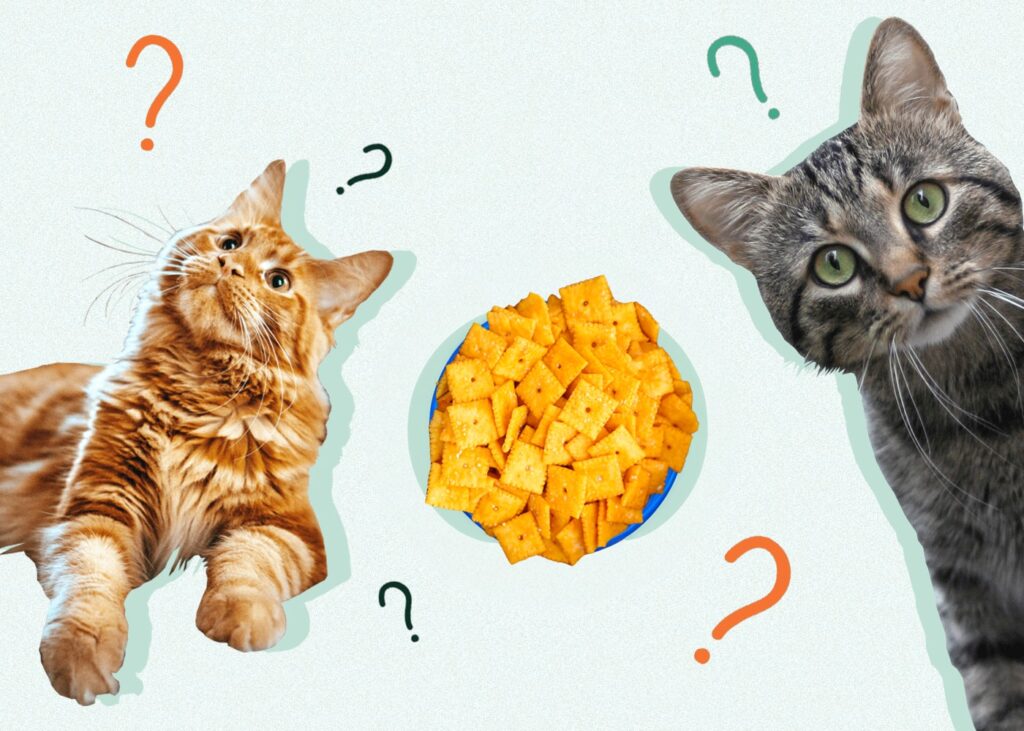


Your feline friend might bat its big eyes at you with irresistible charm while you enjoy a crunchy Cheez-It. Those pleading looks can make any cat parent wonder, Can Cats Eat Cheez-It safely without worry? After all, cats seem curious about almost everything we eat, and snacks like Cheez-Its have that strong, savory aroma that can easily catch their attention. But the big question remains: Can Cats Eat Cheez-It and still stay healthy?
To answer that, it’s important to look at what’s actually inside a Cheez-It. These crackers are made for humans, not pets, and they’re loaded with ingredients that don’t support feline health. High amounts of salt, artificial flavoring, and dairy-based cheese powder can upset your cat’s digestive system. Unlike humans, cats are obligate carnivores, which means their bodies are built to thrive on protein from meat—not carbohydrates or processed snacks. So, when asking yourself Can Cats Eat Cheez-It, the short answer is no. While a single crumb might not cause immediate harm, making Cheez-Its a regular treat can lead to long-term health issues, including obesity and kidney stress.
So, the next time your cat gives you those irresistible eyes, pause and think: Can Cats Eat Cheez-It, or should you stick to healthier, cat-friendly treats? The answer is clear—it’s always better to choose snacks that truly support their health and happiness.
Technically Tasty, But Trouble Lurks Beneath the Surface
While Cheez-Its don’t contain any ingredients that are inherently poisonous to cats, most adult felines are lactose intolerant. This means that dairy products like cheese can cause stomach upset. Their bodies simply don’t produce enough of the enzyme lactase, which is needed to digest milk sugar (lactose).
Just like us humans who struggle with lactose intolerance, cats who consume dairy can experience a range of reactions, from mild discomfort to full-blown vomiting and diarrhea. While the image of a kitten lapping up milk is undeniably adorable, cats actually don’t require dairy in their diet, and it can even make them sick.
Beyond the Cheese: Sodium and Fat Overload
Cheez-Its are also loaded with sodium and fat, which aren’t exactly kind to your cat’s sensitive digestive system. While the occasional salty or fatty treat might not faze us humans, cats have different digestive systems and nutritional needs. As obligate carnivores, cats thrive on a diet primarily composed of meat-based foods. Most human snacks, including Cheez-Its, are best left off the menu. There are even some foods that are downright toxic to cats, so it’s crucial to be mindful of what you share with your furry friend.
Uh Oh! My Cat Snagged a Cheez-It!
If your cat manages to swipe a Cheez-It from your bowl, or you’ve offered them one in the past, don’t panic! While most cats can’t digest lactose well, a single Cheez-It likely won’t cause any major harm.
However, it’s best to avoid making Cheez-Its a regular part of your cat’s diet, or a substitute for their actual cat treats. An occasional cracker or a small piece shouldn’t cause any issues. Just keep an eye on your cat for signs of vomiting or diarrhea, and make sure they have plenty of fresh water available. If you notice anything concerning, it’s always best to consult your veterinarian.
To Share or Not to Share: The Cheesy Dilemma
The biggest concern when it comes to asking Can Cats Eat Cheez-It is lactose intolerance, but that’s not the only issue to worry about. These cheesy crackers are also packed with high amounts of sodium and fat, which can be harmful to a cat’s digestive system and overall health. Cats have very sensitive stomachs, and while Cheez-Its may contain trace amounts of vitamins like B1 and B2, the risk of stomach upset, diarrhea, or even long-term health issues like obesity far outweighs any minor nutritional benefit. So, if you’re still wondering Can Cats Eat Cheez-It, the safer answer is no.
It’s also important to remember that cats are obligate carnivores, which means their bodies are built to thrive on protein from animal sources rather than processed snacks made for humans. Asking Can Cats Eat Cheez-It highlights the fact that these snacks are not formulated with feline health in mind, and offering them too often may cause more harm than good.
Another downside is behavioral. Feeding your cat human snacks regularly could cause them to lose interest in their balanced, nutritious cat food. If your kitty starts turning up their nose at their regular meals in favor of salty crackers, it’s time to rethink the question: Can Cats Eat Cheez-It safely? The answer is still no. Sticking to a proper feline diet ensures your cat stays healthy, happy, and satisfied.
The Final Feline Verdict: An Occasional Treat, Not a Staple
Can Cats Eat Cheez-It? While an occasional Cheez-It won’t send your cat into a tailspin, it’s still not the best idea to make cheesy crackers a regular part of their diet. Cats are obligate carnivores, which means their bodies are designed to thrive on protein from meat rather than processed snacks loaded with salt, artificial flavors, and refined carbs. Cheez-Its, although tasty to us, don’t provide any of the essential nutrients your furry friend needs to stay healthy and strong. Too much salt can even lead to dehydration, digestive upset, or long-term health problems if given too often, which is why the question “Can Cats Eat Cheez-It” often comes up among pet owners.
Instead of giving in to those pleading eyes every time you open a snack bag, consider healthier alternatives. There are countless delicious and nutritious treats formulated specifically for cats, packed with the vitamins, minerals, and protein they require. These options not only satisfy your pet’s curiosity but also support their overall well-being. Can Cats Eat Cheez-It regularly? The answer is no, because safer and healthier treats exist.
And if you want to offer something extra special, a small bite of cooked chicken, turkey, or fish is a safe and protein-rich choice your cat will adore. After all, Can Cats Eat Cheez-It may be a fun question, but the real answer is clear: nothing beats the real thing when it comes to satisfying your feline friend’s cravings—the purrfectly pawsome alternative to human junk food!