



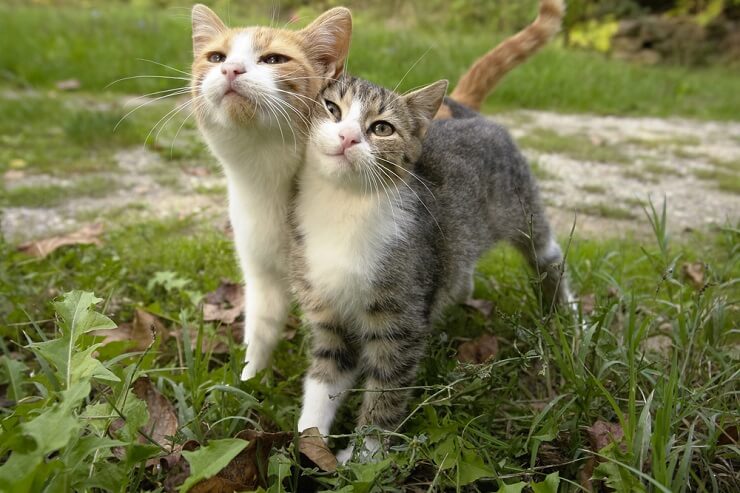
Cats are often viewed as solitary, independent creatures, but anyone who has observed cats living together knows they are much more social and perceptive than they might initially appear. How Cats Learn is a fascinating topic because, while cats do enjoy spending time alone, especially compared to dogs, they are capable of forming complex social bonds and interactions when in groups. One of the most fascinating aspects of feline behavior is their ability to learn from one another. But do cats really learn behaviors from other cats? The answer is a clear yes, and How Cats Learn plays a crucial role in their survival.
Cats use a variety of social cues to observe and mimic the actions of their peers. For example, kittens learn essential survival skills, such as hunting techniques and grooming habits, simply by watching their mother or other experienced cats. Even adult cats can pick up new behaviors by observing the actions of others, whether it’s how to navigate a new environment or how to interact with humans and other animals. This process is often explained by How Cats Learn, which emphasizes observation and imitation.
This social learning helps cats adapt more quickly to changing surroundings and challenges. It also strengthens social bonds within a group, as cats communicate and coordinate their behaviors more effectively. By watching, imitating, and adapting, cats demonstrate that their intelligence and social skills go far beyond what many people might expect from these mysterious and independent animals. Understanding How Cats Learn gives us greater insight into their complex nature. Ultimately, exploring How Cats Learn allows us to appreciate the subtle social dynamics that shape feline behavior.
SOCIAL LEARNING IN CATS
Social learning, or learning through the observation of others, is a well-documented phenomenon in the animal kingdom. While we often associate this type of learning with humans, primates, and birds, cats also engage in social learning, picking up new behaviors by watching their peers.
OBSERVATIONAL LEARNING
Observational learning in cats is evident in various everyday scenarios. For example, a new cat in a household might quickly learn to use a scratching post by watching an older cat. This form of learning is especially prominent in young kittens, who observe their mother and littermates to acquire essential skills and behaviors.
MIMICRY AND MODELING
Cats often mimic behaviors that they see other cats performing, especially if those behaviors result in positive outcomes. If one cat figures out how to open a door or access a hidden treat, it’s common for others to imitate this behavior. This mimicking is not limited to problem-solving but also extends to grooming habits, hunting techniques, and social interactions.
LEARNING THROUGH PLAY
Play is a crucial aspect of a cat’s development, and much of what cats learn through play is influenced by their peers. Kittens engage in playful fights and chases, which help them develop hunting skills and understand social boundaries. Through these playful interactions, they learn how to interact appropriately with other cats.
SOCIAL HIERARCHIES AND BEHAVIOR IMITATION
In multi-cat households, social hierarchies often emerge, influencing how behaviors are adopted and imitated. Dominant cats may establish certain behaviors that subordinate cats then follow. For instance, if the alpha cat prefers a specific sleeping spot or feeding schedule, other cats might adopt the same preferences.
GROOMING AND AFFECTION
Grooming is another behavior that cats learn from one another. Mutual grooming, or all grooming, strengthens bonds between cats. When a cat sees another grooming itself or a companion, it may join in, reinforcing social bonds and maintaining cleanliness.
LITTER BOX TRAINING
A practical example of social learning in cats is litter box usage. New cats in a household often learn to use the litter box by observing resident cats. This observational learning can make the transition smoother and reduce the need for extensive training.
INDIVIDUAL DIFFERENCES
While social learning is evident in cats, individual differences play a significant role. Some cats are more observant and quicker to learn from their peers, while others may be more independent and less influenced by other cats’ behaviors. Factors such as personality, past experiences, and household dynamics contribute to these differences.
ENCOURAGING POSITIVE SOCIAL LEARNING
Understanding the social learning capabilities of cats can be beneficial for cat owners. Here are some tips to encourage positive social learning in multi-cat households:
- Provide Multiple Resources: Ensure there are enough resources like litter boxes, food bowls, and sleeping areas to prevent competition and stress.
- Introduce New Cats Gradually: Slow introductions help cats observe and learn from each other without feeling threatened.
- Model Desired Behaviors: Use resident cats to demonstrate desired behaviors to new cats, such as using scratching posts or being comfortable with grooming.
- Positive Reinforcement: Reward desirable behaviors in all cats to reinforce learning and maintain harmony.
Cats are often viewed as solitary, independent creatures, but anyone who has observed cats living together knows they are much more social and perceptive than they might initially appear. How cats learn is a fascinating topic because, while cats do enjoy spending time alone, especially compared to dogs, they are capable of forming complex social bonds and interactions when in groups. One of the most fascinating aspects of feline behavior is their ability to learn from one another. But do cats really learn behaviors from other cats? The answer is a clear yes, and how cats learn plays a crucial role in their survival.
Cats use a variety of social cues to observe and mimic the actions of their peers. For example, kittens learn essential survival skills, such as hunting techniques and grooming habits, simply by watching their mother or other experienced cats. Even adult cats can pick up new behaviors by observing the actions of others, whether it’s how to navigate a new environment or how to interact with humans and other animals. This process is often explained by how cats learn, which emphasizes observation and imitation.
This social learning helps cats adapt more quickly to changing surroundings and challenges. It also strengthens social bonds within a group, as cats communicate and coordinate their behaviors more effectively. By watching, imitating, and adapting, cats demonstrate that their intelligence and social skills go far beyond what many people might expect from these mysterious and independent animals. Understanding how cats learn gives us greater insight into their complex nature. Ultimately, exploring how cats learn allows us to appreciate the subtle social dynamics that shape feline behavior.