


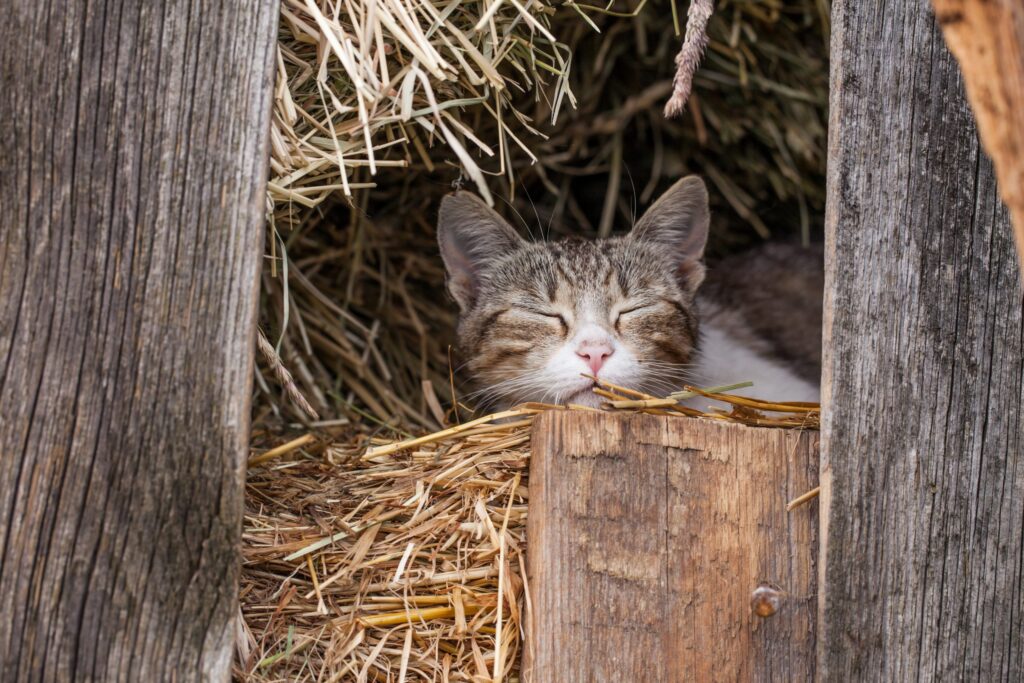


Outdoor Cat Sleeping Spots: Cats are true masters of stealth and comfort, especially when they live outdoors. These independent felines have a natural ability to find the coziest, safest, and most hidden spots for a good nap. Whether it’s to stay warm, feel protected, or simply enjoy a quiet escape, outdoor cats are surprisingly resourceful when it comes to choosing where to sleep.
You might spot one curled up under a porch, nestled in the tall grass, or even inside an old shed or barn. Abandoned buildings can provide shelter from the elements and safety from predators, while a thick bush or a patch of sunlit leaves might offer just the right mix of cover and warmth. Some outdoor cats may even climb trees to rest on sturdy branches, away from ground-level threats. These popular outdoor cat sleeping spots provide the perfect balance of comfort and security.
But what guides their choices? Temperature, safety, and solitude are key factors. Cats instinctively seek out places where they can stay hidden from predators and people, while also staying warm and dry. Their keen senses help them detect changes in their environment, allowing them to adapt quickly and find better spots when necessary. Understanding these outdoor cat sleeping spots can help us appreciate how clever these animals really are. In this article, we’ll explore the seven most common places outdoor cats love to sleep—and why each one is so appealing to our feline friends.
By learning about these outdoor cat sleeping spots, we can even create safer environments for them. From sheltered porches to quiet garden corners, each of these outdoor cat sleeping spots serves a unique purpose in their daily lives. Ultimately, recognizing these favorite outdoor cat sleeping spots helps us better coexist with our independent, stealthy neighbors.
Garages: The Scent of Home and Safety
An open garage is like a cozy invitation. These spaces often carry the familiar scent of humans, which can make a cat feel at ease. Plus, garages offer shelter from the elements and plenty of nooks to hide. Just make sure to check your garage carefully before closing it up—your feline visitor might be napping under your car or in a dark corner.
Underneath Porches and Buildings: Hidden Comfort
Outdoor cats love to sleep under porches or crawlspaces because they provide protection from predators and weather. These tucked-away spots offer an ideal combination of security and a quick escape route, which every cat values. For homeowners, it’s a good idea to inspect these areas periodically, especially if you have pets or children, to prevent any surprise guests.
Abandoned Buildings: Safe Exploration Zones
Feral and outdoor cats are naturally curious. They scout out abandoned structures that allow them to roam undisturbed. These buildings become regular sleep sites once a cat learns the safest places to relax. However, it’s essential to be aware of local ordinances, as abandoned properties can pose risks to both animals and humans if left unchecked.
The Woods: Nature’s Sleeping Bag
Even the most domesticated cats retain their wild instincts. A dense forest offers a wealth of hiding places, from hollow logs to abandoned animal dens. These natural shelters protect cats from rain and predators, though staying in the wild comes with risks like encountering larger animals or getting lost.
Barns: Rodents and Refuge
Barns are an obvious choice for outdoor cats, as they harken back to the days when cats and humans first began coexisting. The promise of mice, warmth, and straw-filled corners makes barns a favorite sleeping location. If you manage a barn or rural property, providing basic care—like water—can help keep these feline visitors healthy and pest populations low.
Boxes and Enclosures: It’s All About Feeling Secure
There’s a reason cats have an almost magical attraction to boxes, and it goes far beyond simple curiosity. Enclosed spaces, such as cardboard boxes, baskets, or even a well-shaped pile of leaves, provide a powerful sense of security for our feline friends. These small, cozy areas mimic the tight, protected spaces cats would naturally seek out in the wild—places where they can hide, rest, and observe their surroundings without being easily seen. These are the kinds of places that make perfect Outdoor Cat Sleeping Spots, offering comfort and safety in unpredictable environments.
Cats are both predators and prey in nature, so having a place where they feel hidden and safe is deeply comforting. The walls of a box or the surrounding cover of leaves give them the feeling of being shielded from threats, both real and imagined. Even indoor cats, who live in a safe and stable environment, instinctively seek out these types of spaces to relax and recharge. This same instinct drives outdoor cats to search for outdoor cat sleeping spots in their surroundings, where they can feel similarly at ease.
Outdoor cats are especially reliant on any structure that provides coverage—whether it’s a wooden crate, a stack of firewood, or an overturned planter. These little hideaways are not just shelters; they are essential Outdoor Cat Sleeping Spots that allow them to curl up, conserve body heat, and stay out of sight from larger animals or nosy humans. Simply put, when it comes to feeling secure, nothing beats the humble box or its natural equivalent. Providing intentional Outdoor Cat Sleeping Spots can significantly improve the wellbeing of stray or feral cats, helping them survive and thrive in challenging conditions.
If you observe carefully, you’ll notice how cats quickly gravitate toward these nooks. From covered porches to bushy corners of a garden, Outdoor Cat Sleeping Spots are quietly claimed and fiercely protected, serving as miniature sanctuaries for our resilient feline companions.