

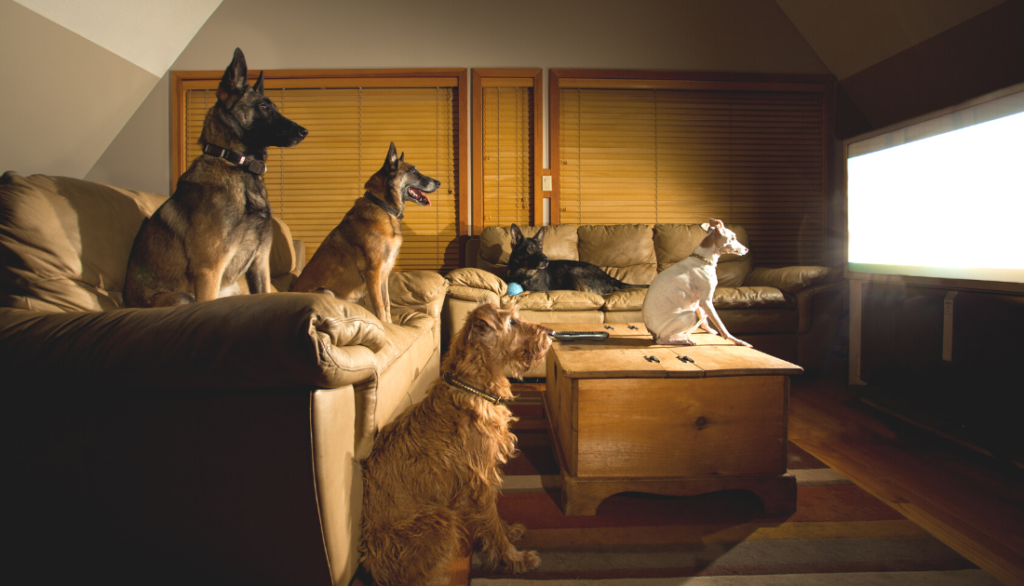

Many dog owners have noticed their furry friends perking up at the sight of moving images on the TV screen. Maybe your pup barks at a barking dog on a commercial, tilts their head when they hear squeaky toy sounds, or even seems to follow the motion of objects across the screen. This leads us to a fascinating question: can dogs see TV, and do they really understand what’s happening on screen?
In this article, we’ll explore how dogs perceive television, what factors influence their interest, and whether your pup is truly watching or just reacting to sights and sounds.

Can Dogs See TV?
The short answer is yes, dogs can see TV—but not in the exact same way humans do.
Dogs’ vision is shaped differently from ours:
-
Color perception: Humans are trichromatic, meaning we see a wide range of colors, while dogs are dichromatic. They primarily see shades of blue and yellow, but reds and greens appear muted or grayish. So while your favorite nature documentary may look vibrant to you, your dog sees a more toned-down version.
-
Motion sensitivity: Dogs’ eyes are highly sensitive to movement. They can detect flickers and quick changes on screen that humans might miss. That’s why some dogs become captivated by fast-moving animals or action scenes.
-
Frame rate perception: Old TVs displayed at lower refresh rates that appeared flickery to dogs. Today’s high-definition screens have higher frame rates, making images smoother and easier for dogs to follow—possibly explaining why more modern pups seem to enjoy TV.
Do Dogs Understand What They See?
Even though dogs can see what’s happening on TV, their level of understanding is limited.
-
Recognizing other dogs
Research has shown that dogs can recognize images of other dogs, even in photographs or on screens. That explains why your pup might bark when a German Shepherd appears in a movie. -
Responding to sounds
Dogs rely heavily on hearing. If they hear barking, whining, or squeaky noises from the TV, they may assume another dog (or prey animal) is nearby. -
Context matters
While a dog might recognize familiar animals, they don’t process complex storylines or follow plot twists. To them, TV is a mix of movement, sound, and recognizable shapes.
Why Some Dogs Love TV (and Others Don’t)
Not all dogs are glued to the screen. Some may ignore the television completely, while others sit and stare for long stretches. A few reasons explain this difference:
-
Breed tendencies: Herding breeds (like Border Collies) are more visually oriented and may find moving images exciting. Scent-driven breeds (like Beagles) might not care as much.
-
Individual personality: Curious or energetic dogs may respond more to on-screen activity, while calmer dogs prefer to nap instead.
-
Early exposure: Dogs that are introduced to TV at a young age are more likely to show interest later on.
What Dogs Might Be Thinking While Watching TV
When you ask yourself, “Can dogs see TV?” it’s worth remembering that their interpretation is different. Here are a few possible “thought processes” your dog could be having:
-
“That barking dog is in my territory!” – A natural protective response.
-
“Something’s moving fast—I need to chase it!” – Triggered by prey drive.
-
“That squeak sounds like my toy!” – Associating TV sounds with playtime.
-
“Nothing smells real…” – Dogs use smell to confirm what they see, so TV will always feel a little incomplete to them.
Can TV Be Beneficial for Dogs?
Believe it or not, TV can serve a purpose beyond entertainment:
-
Stimulation when alone: Leaving the TV on can reduce loneliness for dogs that suffer from separation anxiety.
-
Calming programs: Certain pet-focused channels show nature scenes or use relaxing sounds designed for dogs.
-
Distraction during stress: Some owners use TV noise to mask fireworks or outside disturbances.
Just remember, TV shouldn’t replace walks, playtime, or mental enrichment. It’s an extra, not a substitute for real-life interaction.
Tips for Introducing Your Dog to TV
If you’d like to see whether your dog enjoys watching TV, here are some simple tips:
-
Choose dog-friendly content: Nature shows with animals, especially dogs, can spark interest.
-
Adjust the volume: Loud, jarring noises may scare your pet. Start soft.
-
Observe reactions: Look for signs of interest—head tilts, tail wags, barking, or staring at the screen.
-
Avoid overstimulation: Too much screen time may stress some dogs. Keep it moderate.
Final Thoughts
So, can dogs see TV? Absolutely—they perceive colors differently, detect fast motion, and respond to sounds in ways that humans often miss. While they may not fully understand storylines, dogs can recognize familiar animals and react naturally to what they see. In fact, many pet owners wonder not just can dogs see TV, but whether they truly enjoy the experience.
For some pups, TV is nothing more than background noise. For others, it’s a source of fascination, fun, and even comfort. The next time you settle in for movie night, don’t be surprised if your furry companion joins you on the couch. After all, when you ask yourself, can dogs see TV, the answer might also reveal a new way to bond with your pet.