
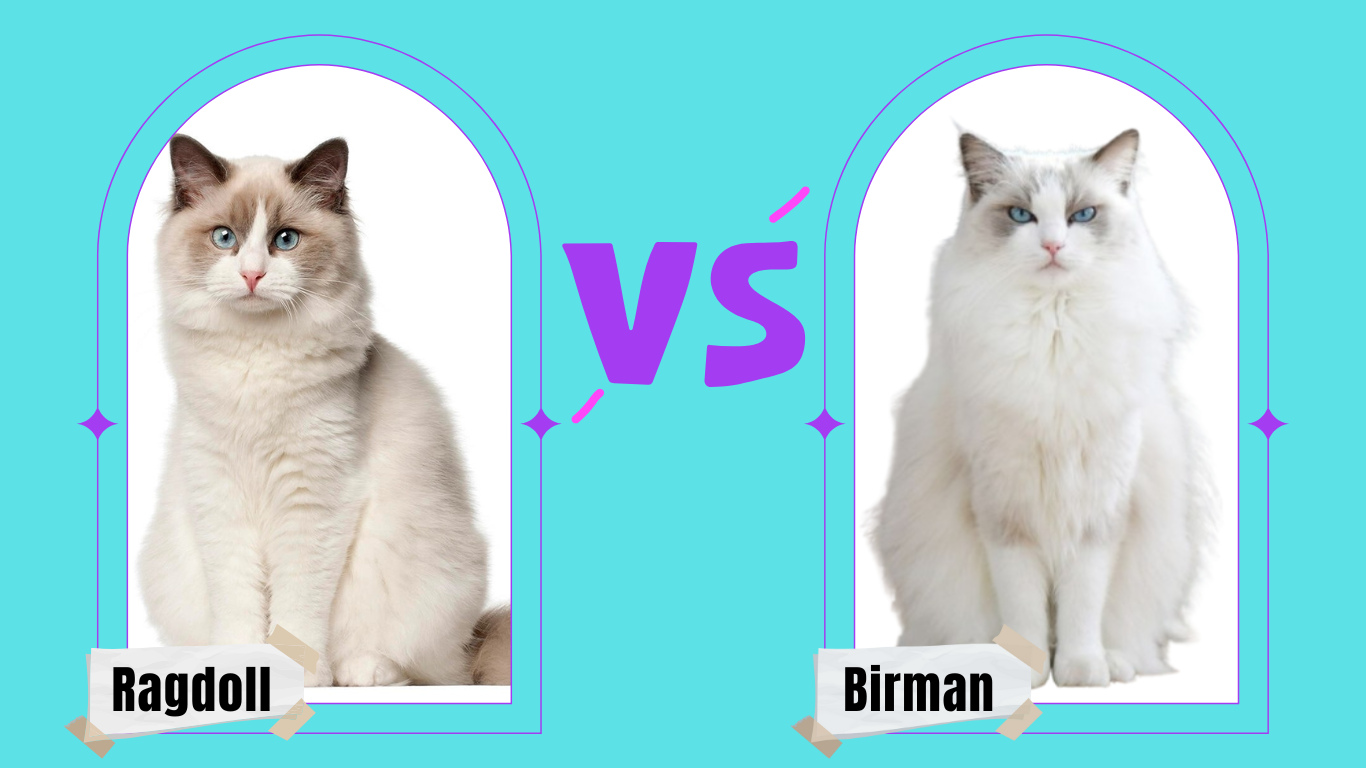

When choosing a feline companion, looks and temperament both play a huge role—especially when comparing Ragdoll vs Birman Cats. Two popular breeds that often cause a bit of confusion—thanks to their striking blue eyes and silky coats—are the Ragdoll and Birman cats. While they may look similar at first glance, these two breeds have key differences that could influence which is the right pet for you.
In this comparative breed guide, we’ll break down the distinctions between Ragdoll vs Birman cats, covering appearance, personality, grooming needs, health, and more. Whether you’re a new cat owner or just curious about these gorgeous breeds, this side-by-side guide will help you understand what makes each one unique.

Breed Origins: Where It All Began
Ragdoll Cats
The Ragdoll breed originated in the 1960s in California, USA. Breeder Ann Baker developed the breed from a long-haired white cat named Josephine, selecting for calm temperaments, floppy postures, and gorgeous blue eyes. They were specifically bred to be large, loving, and low-maintenance lap cats.
Birman Cats
The Birman, also known as the “Sacred Cat of Burma,” has a more mystical origin story. According to legend, they were temple cats in ancient Burma (now Myanmar), though their modern breeding began in France in the early 20th century. Like the Ragdoll, Birmans are known for their docile personalities and beautiful pointed coloration.
Appearance: Fluffy Lookalikes, But Not Twins
One of the biggest reasons people compare Ragdoll vs Birman cats is their similar appearance—but there are a few notable differences.
| Trait | Ragdoll | Birman |
|---|---|---|
| Size | Large (10–20 lbs) | Medium (6–12 lbs) |
| Body Type | Muscular, long, and rectangular | Stocky and compact |
| Coat Texture | Silky, plush semi-long fur | Soft, less dense medium-long coat |
| Coat Colors | Wide variety: colorpoint, bicolor, mitted | Typically colorpoint only |
| Paw Color | White mitts, socks, or color-matched | Always white “gloves” on paws |
| Eye Color | Vivid blue | Deep sapphire blue |

Key Difference:
Ragdolls are generally bigger and heavier with a more muscular build, while Birmans are daintier. The Ragdoll coat also tends to be denser and more plush, while Birmans have a silkier, lighter coat. Birmans always have white gloves, whereas Ragdolls can vary.
Temperament and Personality: Both Sweethearts, with a Twist
Ragdoll Personality
-
Extremely laid-back and gentle
-
Known to go limp (like a ragdoll!) when picked up
-
Follows you from room to room like a dog
-
Gets along well with children, other pets, and even dogs
-
Ideal for indoor living and cuddles
Birman Personality
-
Affectionate but slightly more independent
-
Playful and curious, but not overly hyper
-
Enjoys companionship but may not be as clingy
-
More likely to initiate play than the Ragdoll
-
Friendly and people-oriented, but may demand less attention

Key Difference:
While both breeds are sweet and loving, Ragdolls are famously more docile and cuddly, whereas Birmans have a little more spunk and independence. If you want a velcro cat, the Ragdoll may be a better choice; if you want a cat who balances affection with curiosity, the Birman might suit you.
Grooming and Maintenance
Though both breeds have semi-long hair, their grooming requirements are surprisingly manageable.
Ragdoll Grooming Needs
-
Dense fur, but with little undercoat—reduces matting
-
Brush 2–3 times a week to prevent tangles
-
Moderate shedding, especially in spring and fall
Birman Grooming Needs
-
Lighter, silkier coat with minimal matting
-
Weekly brushing often sufficient
-
Slightly lower shedding than Ragdolls
Key Difference:
Birmans typically require less brushing due to their lighter coats. That said, Ragdolls don’t have an undercoat, which means they’re also fairly low-maintenance compared to other long-haired breeds.
Health and Lifespan
Both breeds are relatively healthy when sourced from reputable breeders, but each comes with a few considerations.
Ragdoll Health Concerns
-
Prone to Hypertrophic Cardiomyopathy (HCM)
-
May develop bladder stones or obesity
-
Lifespan: 12–17 years
Birman Health Concerns
-
Also susceptible to HCM, though slightly less common
-
Possible risk of kidney disease or feline infectious peritonitis (FIP)
-
Lifespan: 13–16 years
Key Difference:
Both cats can live long, healthy lives with proper care, but Ragdolls may require a bit more attention to weight management and heart health.
Ideal Living Situations
Ragdoll Cats Are Best For:
-
Families with kids or other pets
-
Apartment dwellers looking for calm, cuddly cats
-
People who want a constant companion around the house
Birman Cats Are Best For:
-
People who enjoy play and interaction but appreciate a bit of feline independence
-
Homes with a moderate activity level
-
Owners looking for a friendly but not overly clingy cat
Key Difference:
Ragdolls thrive in low-stress, cuddly environments with lots of companionship. Birmans are better suited for households with a bit more activity and play.
Which Breed Is Right for You?
Still torn between Ragdoll vs Birman cats? Ask yourself:
-
Do you want a large, ultra-laid-back lap cat? ➤ Go with a Ragdoll.
-
Do you prefer a playful, charming cat that’s sweet but not always underfoot? ➤ A Birman could be ideal.
Both breeds are affectionate, beautiful, and great companions. It really comes down to your lifestyle and the kind of relationship you want with your cat.
Choosing between a Ragdoll and Birman cat isn’t easy—they’re both absolutely lovable and visually stunning! With their captivating blue eyes, luxuriously soft fur, and calm, affectionate temperaments, it’s easy to see why cat lovers often find themselves torn between the two. However, when it comes to Ragdoll vs Birman Cats, there are subtle but important differences that might sway your decision. Factors like size, energy levels, sociability, and grooming needs all come into play when selecting the ideal feline companion for your lifestyle.
While Ragdolls are known for their docile, laid-back nature and impressive size, Birmans offer a slightly more active and curious personality that makes them equally charming in their own right. Whether you fall for the gentle, floppy Ragdoll or the playful and inquisitive Birman, one thing’s for certain: you’ll be welcoming a loyal, affectionate, and beautiful companion into your home who will quickly become part of the family.
Quick Comparison Recap – Ragdoll vs Birman Cats:
| Category | Ragdoll | Birman |
|---|---|---|
| Size | Large | Medium |
| Temperament | Super laid-back, cuddly | Friendly, playful |
| Grooming | Moderate | Low maintenance |
| Health Risks | HCM, obesity | HCM, kidney issues |
| Activity Level | Low | Moderate |
| Ideal For | Calm households | Families, playful homes |