


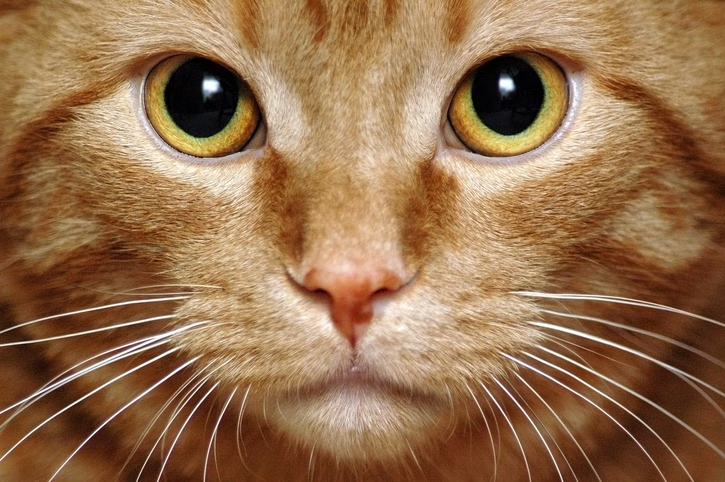


When you look at a cat, one of the first things you probably notice—aside from their piercing eyes or fluffy tails—are those long, elegant cat whiskers framing their face. But did you know cat whiskers are more than just cute facial features?
These sensitive, multifunctional hairs are deeply tied to a cat’s ability to sense the world, navigate spaces, and even express emotion. In this guide, we’ll uncover the secrets behind cat whiskers: how they work, what they do, and why trimming them is a definite no-no.
What Are Cat Whiskers, Exactly?
Whiskers—also known as vibrissae—are specialized, thickened hairs that grow in specific areas on a cat’s body. They’re most noticeable on a cat’s muzzle, but you’ll also find them:
-
Above the eyes (like eyebrows)
-
On the chin
-
On the back of the front legs
-
Near the ears
Unlike regular fur, cat whiskers are deeply embedded in the skin, reaching into areas rich in nerve endings and blood vessels. This makes them highly sensitive, allowing cats to detect even the slightest changes in air currents, objects, or nearby movement.
Why Do Cats Have Whiskers?
Cat whiskers serve as essential tools for a variety of sensory and practical functions. Think of them as a built-in GPS, motion detector, and communication device all rolled into one. Here’s what they help with:
1. Navigation and Spatial Awareness
Cats are known for their agility and ability to squeeze into tight spaces—but how do they know if they’ll fit? Whiskers act as a built-in ruler. In most cats, the length of their facial whiskers is roughly equal to the width of their body.
When approaching a narrow gap, a cat will use its whiskers to gauge whether it can make it through without getting stuck. Whiskers also help cats navigate in total darkness by detecting air movement and nearby surfaces.
2. Hunting and Detecting Movement
Even domesticated cats retain their wild instincts. When a cat is stalking or playing with prey (or toys), its whiskers help detect slight vibrations in the air caused by movement.
Some whiskers, especially those on the front legs, help track prey after the final pounce—even if the prey is under leaves or furniture. This makes them excellent tools for both outdoor and indoor hunters.
3. Balance and Orientation
Although not directly responsible for balance (that’s more about the inner ear), whiskers contribute to a cat’s spatial orientation. They alert the cat to obstacles and help with graceful movement and jumping.
If a cat’s whiskers are damaged or overly stimulated, it can cause confusion, disorientation, and even anxiety.
4. Communication and Mood Detection
Cats don’t just talk with meows and purrs—they use their whiskers to express emotions. Paying attention to your cat’s whisker position can tell you a lot about their mood:
-
Relaxed whiskers = Calm or content
-
Forward-pointing whiskers = Curious or on the hunt
-
Pulled-back whiskers = Scared, defensive, or annoyed
Next time your cat’s staring out the window or hiding under the bed, take a moment to observe their whiskers. They’ll probably tell you everything you need to know.
What Happens If You Cut a Cat’s Whiskers?
Cutting a cat’s whiskers might not cause physical pain (since the hairs themselves don’t have nerves), but it can seriously disorient and stress your cat.
When whiskers are trimmed or damaged, cats may:
-
Bump into walls or furniture
-
Lose confidence when jumping or exploring
-
Act anxious or withdrawn
-
Show signs of motion sickness
Whiskers are essential to your cat’s perception of their environment. Never trim or pluck them, even if they look long or uneven. If you notice whiskers falling out occasionally, that’s normal shedding—but consistent whisker loss could signal a health issue.
Do Cat Whiskers Grow Back?
Yes, cat whiskers do grow back—though the process is slow and varies from cat to cat. If your cat loses a whisker here and there, it’s no cause for alarm. Whiskers, like other hairs, have natural growth cycles. However, if whiskers are falling out in large numbers or don’t grow back over time, it’s worth talking to your vet.
The Science Behind Whisker Sensitivity
Cat whiskers are rooted in follicles filled with blood vessels and sensory neurons, making them extremely sensitive to touch and pressure. Each whisker is connected to proprioceptors, which send data to the brain about position, movement, and touch.
That’s why many cats hate having their whiskers touched, especially during eating or petting. This sensitivity has led to terms like “whisker fatigue,” where cats become overstimulated from constant whisker contact—such as with narrow food bowls.
What Is Whisker Fatigue?
Whisker fatigue isn’t a myth—it’s a real sensory overload condition. If your cat’s food or water bowl is too narrow or deep, their whiskers may constantly brush the sides, overstimulating their nervous system.
Signs of whisker fatigue include:
-
Pacing in front of the food bowl
-
Knocking food out of the dish
-
Hesitating before eating
-
Acting hungry but refusing to eat
The fix?
Use shallow, wide bowls that don’t force your cat’s whiskers into uncomfortable positions. Some brands even offer “whisker-friendly” bowls designed specifically for this purpose.
Fun Facts About Cat Whiskers
-
Cats typically have 12 whiskers on each side of their face—24 in total.
-
Whiskers are arranged in four rows, and each one plays a role in precise movement tracking.
-
Some cats, like the Sphynx, may have very short or even no visible whiskers due to their genetics.
-
Whiskers are often the first hairs to develop in the womb.
-
Whisker color can vary—white in light-colored cats, black in dark-colored cats, or even mismatched!
Respect the Whiskers
Cat whiskers aren’t just there for show—they’re complex tools vital to your feline’s ability to thrive. From hunting to navigating and even expressing emotion, whiskers are part of what makes cats such mysterious and fascinating creatures.
So next time your cat brushes past your cheek or angles their whiskers toward something new, you’ll know—they’re gathering intel, mapping the world, and doing it all with elegance.
Bottom line: Never cut your cat’s whiskers, always offer whisker-friendly bowls, and give those amazing sensory tools the respect they deserve.